

Planning your dream destination wedding as a UK expat brings incredible joy, but understanding your tax obligations shouldn’t dampen the celebration. Whether you’re saying “I do” on a sun-soaked beach in Greece or in a romantic Italian vineyard, partnering with specialists like Global Tax Consulting ensures you navigate tax compliance confidently while focusing on what truly matters—your special day.
Your tax situation depends on several factors unique to expat life. Register any monetary gifts from UK-based family and friends correctly with HMRC, particularly if amounts exceed inheritance tax thresholds or if you’re receiving contributions toward wedding expenses. Understand how your country of residence treats wedding-related income, especially if you’re monetizing your celebration through sponsorships or social media partnerships—a growing trend among modern couples.
Document all cross-border transactions meticulously, from deposit payments to vendors in multiple countries to currency exchanges for your wedding budget. These records prove invaluable during tax filing season and help you claim any applicable reliefs or exemptions based on double taxation treaties between the UK and your host country.
Consider timing strategically around tax years in both jurisdictions, as receiving substantial gifts or making large international transfers could impact your tax position. Like celebrities Priyanka Chopra and Nick Jonas, whose multi-country wedding celebrations required careful financial planning, your destination wedding deserves the same thoughtful approach to ensure your happily-ever-after starts on solid financial ground.
Why Tax Matters When You’re Planning From Abroad
Planning your dream wedding from abroad brings such exciting possibilities, from beachside ceremonies in Spain to vineyard celebrations in France. But here’s something that deserves a place on your wedding planning checklist alongside touring destination wedding venues and choosing your dress: understanding how tax might affect your big day.
Now, before you worry that this sounds complicated, let’s normalize something important. Just as you’d naturally consider your budget, guest list, and venue capacity, thinking about tax implications is simply another aspect of responsible wedding planning when you’re living as an expat. It’s not about adding stress, it’s about making informed choices that protect your celebration and your future together.
Your tax residency status as a UK expat determines which country’s tax rules apply to you, and this can influence various wedding-related financial decisions. Whether you’re receiving monetary gifts from family, managing wedding contributions from different countries, or even considering how you’ll handle joint finances after marriage, your residency status matters. Some couples discover that gift tax rules differ significantly between countries, while others find that transferring funds internationally for wedding expenses requires thoughtful planning.
Think of it this way: you wouldn’t book a destination venue without understanding their payment terms and cancellation policies. Similarly, understanding your tax position helps you plan confidently and avoid unexpected surprises. Many engaged couples living abroad have navigated these considerations successfully, and with the right guidance, you can too. The goal isn’t to let tax concerns overshadow your joy, but rather to address them early so you can focus on what truly matters: celebrating your love story in the destination of your dreams, surrounded by the people who matter most.

Understanding Your Tax Residency Status Before Saying ‘I Do’
The Statutory Residence Test Made Simple
If you’re living abroad and planning your wedding, understanding your UK tax residency status is simpler than you might think. The Statutory Residence Test sounds intimidating, but it’s essentially a straightforward way to determine whether you’re considered a UK resident for tax purposes during your wedding year.
Think of it as a friendly checklist rather than a complicated exam. The test looks at three main areas: how many days you spend in the UK, where your family and home are, and where you work. For most couples planning a destination wedding, the day count is the most relevant factor. Generally, if you spend fewer than 16 days in the UK during the tax year, you’re automatically non-resident. If you’re between 16 and 45 days, other factors come into play.
Here’s a real-world example: Sarah and James, who moved to Dubai for work, returned to the UK for just two weeks to finalize their wedding venue and attend dress fittings. Because they spent fewer than 16 days in the UK and maintained their primary home abroad, they remained non-resident for tax purposes, even though their hearts were set on a beautiful ceremony in the Cotswolds.
The wonderful news is that brief visits home for wedding shopping, venue tours, or family celebrations typically won’t affect your non-resident status. However, keep a simple record of your UK visits during your wedding planning year. This documentation brings peace of mind and makes everything clearer should you need to demonstrate your residency status later.
What This Means for Your Wedding Budget
Your tax residency status can genuinely impact how much you’ll save or spend on your dream celebration. If you’re a UK non-resident planning a destination wedding, monetary gifts from family members back home typically won’t trigger UK tax consequences for you, though your generous relatives might need to consider inheritance tax planning if their contributions are substantial. This is particularly relevant if your parents are kindly funding part of your celebration, as gifts given more than seven years before they pass won’t count toward their estate.
For couples maintaining UK residency while working abroad, understanding your domicile status becomes essential when budgeting for those lovely cash gifts from overseas relatives. The good news? Wedding gifts are generally exempt from immediate taxation, but keeping records of larger contributions protects you should questions arise later.
One bride we spoke with discovered her parents’ generous wedding contribution qualified for inheritance tax exemptions because it fell under normal expenditure from income. Understanding these nuances meant her family could celebrate generously without worry, allowing everyone to focus on the joy of the occasion rather than unexpected tax bills down the line.
Navigating Gift Money and Family Contributions

When Wedding Gifts Trigger Tax Questions
Here’s some wonderful news that should let you breathe a little easier: wedding gifts from family and friends are generally completely tax-free in the UK, even when you’re living abroad as an expat. Whether your guests slip you cash in a card, transfer money to help with honeymoon expenses, or contribute to your house deposit fund, these gestures of love don’t typically trigger tax concerns.
The UK’s gift exemption rules are particularly generous when it comes to weddings. Parents can give up to £5,000 each, grandparents can contribute £2,500 each, and other guests can gift £1,000 without any tax implications whatsoever. Even amounts beyond these thresholds rarely become taxable unless the giver passes away within seven years, which understandably isn’t something most couples need to worry about during wedding planning.
That said, if you’re receiving substantial contributions toward your destination wedding from multiple sources, it’s worth keeping a simple record of who gave what and when. Think of it as part of your thank-you card organization rather than anything overly formal. This documentation becomes helpful if questions ever arise, though for most couples, they never do.
The key takeaway? Accept those generous wedding gifts with gratitude and joy. Your loved ones want to celebrate this special milestone with you, and the tax system recognizes weddings as the perfect occasion for giving without creating bureaucratic headaches.
Cross-Border Transfers for Your Big Day
When your UK-based family wants to contribute to your destination wedding fund, managing those transfers wisely can save you both money and stress. The good news is that wedding gifts, including monetary contributions from parents and relatives, are typically tax-free in most countries, but understanding the best practices keeps everything running smoothly.
Consider using established money transfer services rather than traditional bank transfers, as they often offer better exchange rates and lower fees. Many couples find services like Wise or CurrencyFair particularly helpful for larger amounts. Just remember to keep clear records of who sent what and when, especially for significant contributions that might exceed reporting thresholds in your country of residence.
A lovely real-life example comes from Emma and James, who married in Portugal while living in Dubai. They created a simple spreadsheet tracking all family contributions, which proved invaluable when organizing their finances and writing thank-you notes. Their accountant later praised their organization, confirming everything was properly documented.
If you’re receiving substantial amounts, it’s worth checking whether your country of residence has gift tax rules or reporting requirements. While most jurisdictions don’t tax genuine wedding gifts, knowing the local rules gives you complete peace of mind as you plan your special day.
Smart Financial Planning for Your Destination Celebration
Setting Up Joint Accounts Across Borders
Setting up joint accounts as an expat couple is such an exciting step in blending your lives together, though it does come with a few extra considerations when you’re living abroad. When you and your partner open a joint account in your host country, both of you typically need to report this to HMRC if you’re still UK tax residents, even if the account is overseas. This reporting requirement applies to accounts holding more than a certain threshold, so it’s worth checking current limits.
The good news is that reporting doesn’t necessarily mean paying tax twice. Many countries have agreements with the UK to prevent double taxation, which means you won’t be penalized for having funds in multiple locations. If you’re receiving wedding gifts into a joint account abroad, these generally aren’t taxable income, which is lovely news for your wedding fund.
Celebrity couple Emily Blunt and John Krasinski navigated similar cross-border financial planning when moving between the US and UK, and getting professional advice helped them establish their joint finances smoothly. Consider opening your joint account a few months before your wedding to allow time for any administrative requirements and to familiarize yourselves with the reporting process. Many banks now offer expat-friendly services that can guide you through the paperwork, making this milestone feel less daunting and more like the celebration of partnership it truly is.
Managing Vendor Payments in Multiple Currencies
When you’re planning a destination wedding abroad, managing payments to international vendors requires a bit of extra thought, especially when it comes to keeping proper records for tax purposes. The good news is that with a little preparation, you can handle this smoothly while staying organized.
Start by documenting everything from the beginning. When reviewing your wedding vendor contracts, keep copies of all invoices, payment confirmations, and currency exchange rates used at the time of each transaction. These records become invaluable if you need to demonstrate expenses to HMRC or claim any applicable deductions.
Consider using a dedicated bank account or payment service for your wedding expenses. This creates a clear paper trail and simplifies tracking. Many couples find that international payment platforms offer competitive exchange rates and automatically generate transaction records, which takes one task off your plate during busy planning months.
Be mindful that exchange rate fluctuations can affect your budget, so factor in a small buffer when calculating costs. If you’re making large deposits to secure venues or photographers, spreading payments over time can help manage currency risk.
Remember to request detailed receipts that clearly state what services you’re paying for, as generic descriptions might not satisfy tax documentation requirements later on.
Real Stories: How UK Expat Couples Handled Wedding Finances
When Sarah and James, both working in Dubai, decided to marry on the stunning Amalfi Coast, they knew their financial situation needed careful thought. As UK expats who’d lived abroad for four years, they wisely consulted a tax advisor before making any major deposits. “Our advisor explained that because we’d been non-resident for tax purposes, we could use our overseas savings without triggering UK tax issues,” Sarah shares. “We also learned to keep all our wedding expense receipts organized, just in case.” They allocated funds carefully, budgeted for professional advice upfront, and even planned their bachelorette party destinations with tax efficiency in mind. The result? A breathtaking Italian celebration for 80 guests without any unexpected tax complications. “The peace of mind was priceless,” James adds. “We could focus on enjoying our special day rather than worrying about paperwork.”
Meanwhile, Emma and Priya, a couple working in Singapore, chose a destination wedding in Bali. Having moved abroad just 18 months before their engagement, their tax situation was more complex. They discovered early that their residency status would affect how they managed wedding gifts and monetary contributions from family. “We set up a joint UK account specifically for wedding funds and tracked every transfer meticulously,” Emma explains. Their proactive approach meant consulting both UK and Singaporean tax specialists, which cost around £800 but saved them potential headaches. “Understanding the rules around gift tax and foreign income meant we could accept our families’ generous contributions with confidence,” Priya says. Their Balinese beach wedding was everything they dreamed of, proving that with proper planning and professional guidance, destination weddings for expats can be both magical and financially sound.
Income from Wedding Registries and Honeymoon Funds
Modern wedding trends have beautifully evolved to include honeymoon funds and cash registries, giving couples more flexibility to create their dream experiences. If you’re a UK expat planning a destination wedding, you’ll be pleased to know that gifts from loved ones, whether traditional presents or contributions to your honeymoon fund, are generally considered personal gifts and aren’t subject to UK income tax.
However, there are some nuances worth understanding. Cash gifts and crowdfunded experiences typically remain tax-free as they’re given out of affection and celebration, not as payment for services. The key distinction is that these are genuine gifts from friends and family who want to contribute to your happiness, much like buying wedding rings online or any other wedding tradition.
That said, if you’re using platforms that charge processing fees or if your registry includes business-related elements, it’s worth keeping documentation. Some countries where you might be residing as an expat have different gift tax thresholds or reporting requirements. For instance, certain jurisdictions require declaration of gifts above specific amounts, even if they’re not taxable.
The wonderful news is that your guests’ generosity toward your honeymoon adventures or new home together shouldn’t create tax headaches. Keep simple records of contributions, and if you’re receiving particularly substantial gifts from generous relatives, a quick chat with a cross-border tax advisor can provide peace of mind, ensuring you can focus on the joy of your celebration.
When to Consult a Tax Professional
Questions to Ask Your Tax Advisor
Walking into a tax consultation feeling prepared makes all the difference. Before meeting with your tax advisor, jot down these wedding-specific questions to ensure you cover all the essential details. Start by asking how your residency status affects your wedding expenses and whether any costs might be deductible. Inquire about the tax implications of receiving monetary gifts from family and friends, especially if they’re coming from both UK and overseas sources. If you’re planning a destination wedding, ask whether you need to declare any benefits or discounts you receive from vendors abroad. Don’t forget to discuss how joint accounts or merged finances after marriage might affect your tax filing requirements. If either of you owns property in multiple countries, ask how this impacts your overall tax situation. Finally, request guidance on record-keeping for wedding expenses and gifts. Remember, there are no silly questions when it comes to protecting your financial future together. Your advisor is there to help you navigate these waters with confidence, so you can focus on the joy of your celebration. Coming prepared shows you’re taking control of your financial journey as a couple, which is something to feel proud about.
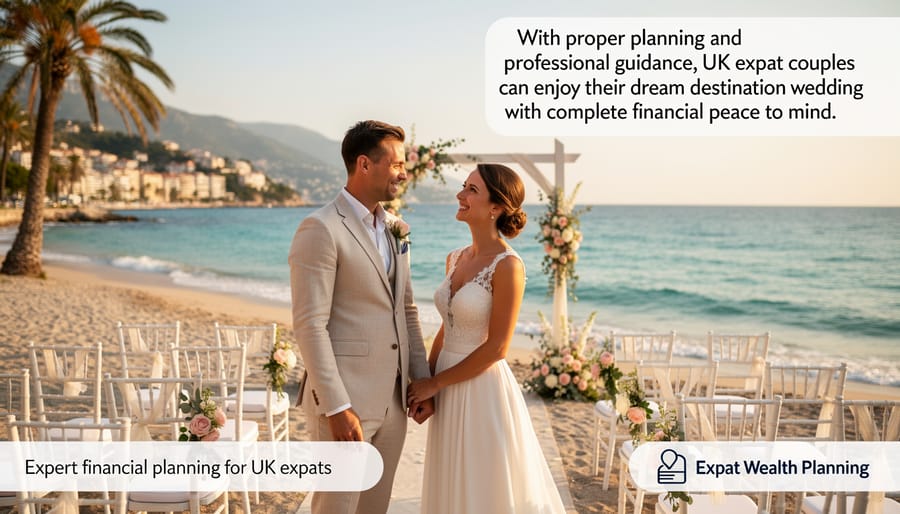
At the heart of all this planning and preparation is something truly beautiful: you’re celebrating your love story in a destination that speaks to your hearts. While tax considerations might seem worlds away from flower arrangements and first dances, addressing them thoughtfully is simply another way you’re building a strong foundation for your life together.
Think of Kate and William, who despite the grandeur of their Westminster Abbey celebration, still had to navigate complex financial and administrative considerations. The difference between a stress-free wedding and one clouded by financial worries often comes down to the planning that happens now, before you walk down the aisle.
The good news is that with the right approach, you absolutely can have both your dream destination wedding and complete financial peace of mind. By understanding your tax obligations as a UK expat, keeping proper documentation, and seeking professional advice when needed, you’re setting yourselves up for success that extends far beyond your wedding day.
Remember, every couple who’s successfully navigated these waters started exactly where you are now. They asked the questions, did their homework, and took the necessary steps to protect their financial future. You’re already on the right path simply by being informed and proactive.
So go ahead and choose that stunning overseas venue, plan the celebration you’ve always imagined, and step into married life knowing you’ve handled everything with care and consideration. Your wedding day should be filled with joy, not worry, and proper planning makes that possible.